Showing posts with label hermit vocation. Show all posts

Wednesday, May 10, 2023

Christian, Catholic, Mystic, Hermit: Delight in Distinctions of Pachomius, Palemon, and Antony of the Desert

 I found the following information on Catholic News Agency online site, May 9, 2023.  The explanation of those who attempt the hermit life but find the solitude too arduous is excellent means of understanding the difference between actual hermits and those who refer to themselves as such or begin as solitaries yet make adaptations otherwise.  Many who begin as hermits otherwise develop means of living together in community be it under the same roof or locationally nearby, or who share houseing with another diocese hermit or live on monastery grounds close to the monks or sisters, participating in liturgy, meals, or other involvements. 

Some in recent times live as diocese hermits and are involved in parish life in leadership positions or careers on parish or diocese staff, or have other careers involving people such as hospital chaplains or engaging in paid spiritual direction.  Some have social lives involving friends with whom they dine out, go on weekend travels, participate in community events and functions, run retreat centers in which people come to stay or help provide for the one who considers him-or-herself a diocese "hermit" but who is not actually living in the silence of solitude nor other aspects traditionally nor set forth in The Catechism of the Catholic Church as specifically hermit conditions.  These persons are more likened to those of the past who were not able to fulfill hermit life so veered more to the also acceptable cenobitic type lifestyle.

Fending for oneself, going to medical appointments, running errands for living and food necessities, living by oneself in an abode, paying one's way in life, if earning income then doing so in a solitary job which avoids interactions or involvements with people around, occasional public worship participation, and limited, as-needed charitable accessibilty by those who may wish to contact the hermit--all these are aspects of a hermit's temporal world needs.  

Remaining hidden from the specific notice of others has and remains a key aspect of a hermit's existence; living out the Word of God in prayer, praise, and penance, as well as charity to those one may encounter in the temporal world responsibiltiies, also, are basic to the Christian Catholic hermit's vows and life, of which most if not all vows would include the hermit living the Word of God and adhering to the Gospel.

For those who are actual hermits more than cenobites, there will of course be times in which the hermit is forced by circumstance to be less in solitude, such as if having surgery requiring a few days or a week of someone present in after-care needs.  Or, when the hermit in keeping with the "hidden from the eyes of men [humankind], must interact with medical staff or those living in neighborhoods or apartment complexes, to not draw attention to oneself as a "hermit" per se--the hermit thus interacts briefly in charity, discussing situations the others may desire or need to discuss in the normal course of living as in the world yet not of it.

From the following, we can see there is nothing wrong or in dispute of those who are hermits and those who are more cenobitic in their life styles and needs.  Being strictly a hermit is not an easy path, nor is it required of anyone to be noted nor criticized if they are not called to the hermit life nor can remain in that life for long or exclusively.  That is why it is good to read about those from the earliest times in Christianity who sought other means of living their vocations when finding it necessary for themselves to be living with others in community, be it in a religious order or shared housing, or working and socializing with others. 

But that is not technically then living the hermit vocation.  It is more living as a cenobite, as a religious who is in part inwardly prayerful and quiet, but in  circumstance is interacting mostly with others during the day in work place or social life or in shared housing be it as a roommate in a single dwelling or living amidst many in apartment units. Running a diocese retreat center is an example of one who is around many people day and night, interacting more as a hotel manager, business accountant, librarian/gift shop salesperson, facilities manager, and activities director--and not really as a hermit, whether or not approved as such.  Being a parish administrator, worship service leader, preacher, hospital chaplain, and diocese employees of various designations, are also not actually hermits per se, either, but can be considered more single persons living in the world doing religious type work with others, or who are more cenobitic by nature and function.

There have been noted in various articles, of current clerics not understanding the traditional role and lifestyle of hermits versus cenobitic religious persons. These are those who want to be hermits but are not actually suited to the solitude and hiddenness involved.  The following discussion of early hermits and those who became cenobites, is helpful in determining one's path that God has chosen, and to what extent or degree of "hermit"--or as a cenobitic type living more among people yet with some aspects of solitude, prayer, and penance but not to the level of the traditional and set forth stipulations of hermit vocation. 

Regardless, the following will help discern if one is able to live as a Catholic hermit or needs an adaptive version of the more arduous hermit existence of silence and solitude and being hidden from others, more removed from the temporal world. As we can read, there are "saints" of various types of persons--hermit or those who were more interactive and working within society and with others in the world, but living in their own apartment, diocese-supplied housing, or home at night.  (There are no aspersions cast of any or all types or variations of any vocations, as we can see by the life examples of these saints.)


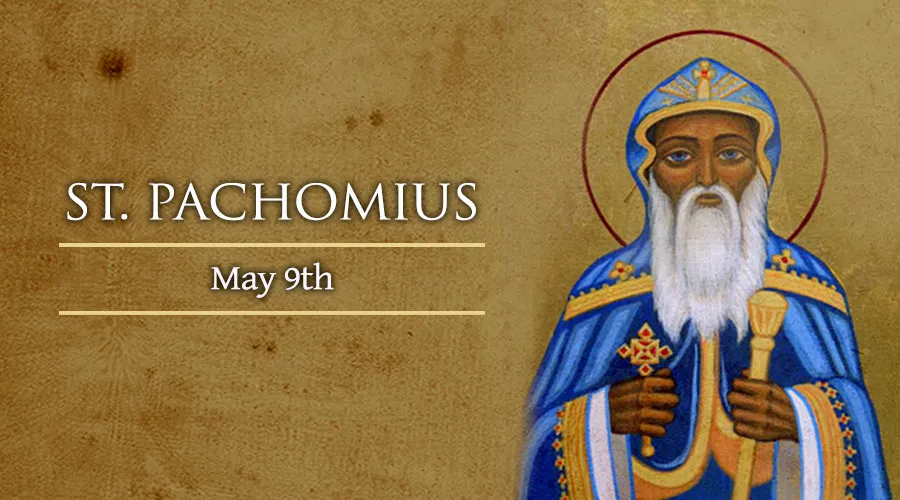
St. Pachomius

St. Pachomius can justifiabley be called the founder of cenobitic monasticism, monks who live in community. Even though St. Antony the Great was the first to go into the desert to live a life of seclusion pursuing evangelical perfection, he lived a heremitic life, that is, a primarily solitary life.

Pachomius first started out as a hermit in the desert, like many of the other men and women in the third and fourth centuries who sought the most radical expression of Christian life. There he developed a very strong bond of friendship with the hermit Palemon. One day during prayer, he had a vision in which he was called to build a monastery, and was told in the vision that many people who were eager to live an ascetic life in the desert, but were not inclined to the solitary life of a hermit, would come and join him.  His hermit friend, Palemon, helped him to build the monastery and Pachomius insisted that his cenobites were to aspire to the austerity of the hermits.

However, Pachomius knew that his idea was a radical one, because most of the men who came to live in his monastery had only ever conceived of the eremitic lifestyle. His great accomplishment was to reconcile this desire for austere perfection with an openness to fulfilling the mundane requirements of community life as an expression of Christian love and service. He spent most of his first years as a cenobitic doing all the menial work on his own, knowing that his brother monks needed to be gently inducted into serving their brothers in the same manner.  He therefore allowed them to devote all their time to spiritual exercises in those first years.  At his death, there were eleven Pachomian monasteries: nine for men and two for women.

The rule that Pachomius drew up was said to have been dictated to him by an angel, and it is this rule that both St. Benedict in the west and St. Basil in the east drew upon to develop their better known rules of cenobitic life. St. Pachomius died in the year 346.

Monday, June 29, 2020

Catholic Hermit: Stepping Back in Briefly to Comment


I received an email from someone who says she so much misses my blog writing and asked if I have another blog presence online?  Yes, I do, but the topic is well hidden and thus far I'm yet discerning if it is misleading or not relevant.  I am NOT at all into new age ideologies now coming under variety of other terms to mislead people. I am finding especially Catholics in parishes who are seeking deeper relationships with God and the Holy Spirit becoming quite duped.

However, I have noticed that one of the main reasons I decided to cease writing on this blog was due to a woman who is canonically approved in her diocese, yet a year ago her vicar general nor her bishop's office were totally unaware that she was a canonically approved hermit in her diocese.  I had written them, finally, after 12 years of her stalking and doxxing, her derisive libel, and her incessantly attacking just about everything that I wrote.

It got to a point that my own writing seemed tainted by a sense of what could be described as a dark if not demonic presence of this woman and at least one other who has in the past been quite nasty in comments left on my blog/s.  I have written under other blog titles depending on my progression in spiritual life, of which I have progressed recently, although I remain very much a consecrated Catholic hermit.  I have been writing of other aspects which include seeking His Real Presence, of course, which is our earthly yearning and seeking and desire of union in the Trinity.

But I was saddened to see that since I stopped writing on this blog site, the canonically approved woman has simply found other non-canonically approved, but very much consecrated and valid Catholic hermits, to attack and debate online, evidently on some list of hermits or a hermit forum.  I have not located such a list, but my life is not created for nor focused on debating over who is humble and who is not, or who is a real or consecrated Catholic hermit and who is not. The woman's obsession continues, and it is the reason I wanted rid of that darkly spiritual, hovering influence.

That is not of God.  I noticed she had stated that I wrote hateful things of CL603. I have never hated the canon law nor written hatefully of it.  I have simply and accurately pointed out that it is not necessary for Catholic hermits, and was not at all what God Himself wanted for me as a hermit.  That was verified by two bishops, and I consider myself saved from intermediary distraction to what God wants of us which is not to be single-minded of purpose and focus on a temporal vocation and who is consecrated and right and who is not, who is humble and who is not.

We are called to come into God's transformational presence, to be aware of His presence in our daily lives, and to love and serve God and to love and serve others, not to be stalking and attacking and having nothing much of spiritual substance to write other than constantly seeking out those who are not canonical Catholic hermits but very much indeed holy Catholic people who are hermits and very much by virtue of their living their vows and professed evangelical counsels and as vital and consecrated in and by Christ as those who seem to need promote themselves as the authority of all of the Church's hermits and to decry and debate and try to blow off anyone who happens to disagree or move beyond the topic which to me became nauseous and noxious, both.

Let the Lord determine His saints, and until then we are all sinners seeking to love and serve God in Himself and to love others as God loves. Jesus can determine who He considers consecrated, and for those hermits who are living the traditional, historical, holy hermit vocation as am I, especially a man who now has become this prideful CL603 woman's focus of attack and debate online, know that I am praying for you.  Please do not get sucked into her web as I had far too often.  

The devil is deceptive and adept at trying to cull us off from our Christian, spiritual purpose no matter what our vocations.  Stay focused on our Lord Jesus Christ, stick with Scripture, pray (the rosary is very good meditative prayer and one the devil despises and will protect you from the likes of such), and rise beyond the muck and dulled topic of which this woman is incapable of thinking or or writing much other. I was informed years ago that this is what she does--wants to be the hermit superior or such.  We all know that Jesus loves and desires and embraces all of us who come to Him.

I'm not more concerned with the amount of new age ideologies infiltrating the Church in various ways, and priests and parishioners not recognizing its insidious and subtle influence.  I'm not sure why Scripture and the writings of saints and their spiritual directors, and theologians of past centuries whose writings have stood the test of time and the fruit born out to be solid and good--is not enough.  There is all the more to sift through and discern with the amount of information in this time of internet and social media, and people able to present themselves however they wish--including a canonical hermit whose vicar general wanted nothing to do with her.  Ouch--the truth hurts. 

We Catholics have to face it, that we must discern much that is out there, including priests, bishops, Catholic colleges and universities, parishioners and programs.  When Jesus says the path is narrow and few are they who are on it, but He calls us to go through the narrow gate--He MEANS IT.  I have very much needed this reminder recently, and it may seem rather lonely and unexciting, but we must decline the other and stick with the narrow path, stick with the Living Word of God, and seek the guidance of the Holy Spirit, God the Father, learn from Jesus Christ, and count on the intercessions and protection of the Virgin Mary, our Heavenly Mother, and our guardian angels and of course the archangels and all of the nine choirs.

God bless you all, and I'm sorry to not be able to direct you to my writing, but for now I ask you to pray for me as I discern what His Real Presence wants of me.  I am praying for each of you, and please do not get waylaid or distracted by such drivel as can be out there that seems enticing or holds some aspects of truth, but not all and of combative or prideful nature.  I leave you with the homily of St. Bernard of Clairvaux--and also the reminder that in current times, people are even using the writings of St. Teresa and of St. Ignatius and rewriting and twisting what these saints wrote and their intentions, and making the guidance and exercises into false agendas that seem tantalizing and promising but you are best off reading the actual writings of these saints and not the adulterated versions being published and gaining great traction.

Saint Bernard (1091-1153)

Cistercian monk and doctor of the Church
First sermon for the feast of Sts. Peter and Paul, 1,3,5

“I have prayed that your faith may not fail; and once you have turned back, you must strengthen your brothers ” (Lk 22:32)

Christ the Mediator “committed no sin, and no deceit was found in his mouth” (1Pt 2:22). How could I venture to draw near him, I who am a sinner, a grievous sinner whose sins are more numerous than the sands of the sea? He is all that is most pure, I am all that is most impure (...)This is the reason why God has given me these apostles, men and sinners – very grievous sinners – who learnt for themselves, through their own experience, how merciful they should be to others. Guilty themselves of great offenses, they will grant a ready pardon to great offenses and repay us according to the measure meted out to them (Lk 6:38). The apostle Peter committed a very great sin, possibly the greatest of all. He received a forgiveness for it that was as swift as it was ready, even to not losing anything of the privilege of his primacy. And Paul, who unleashed unrestrained aggression against the newborn Church, was brought to faith at the call of God's Son himself. In return for so many evils he was filled with such great blessings that he became “a chosen instrument to carry the Lord's name before Gentiles, kings and Israelites” (Acts 9:15) (...) Peter and Paul are our teachers: they learned the way of life fully from the one Teacher of all and continue to teach us today.

Saturday, May 16, 2020

Catholic Hermit, God's Hermit: Joan of Arc; Still Simmering


Writing is such an integral part of my existence, including pain management.  The pain requires "activity" of sorts to help distract, but the pain also needs lots of rest; so the body needs to take many breaks and sometimes is in bed for days or mostly in bed over weeks, or now it's been over a year.  The type of pain over a year ago had more to do with the spinal cord increasingly being pinched off--nearly totally, plus the other nerves impeded and a disintegrated vertebra and bone spurs a' plenty.  All that is repaired, but the pain post surgery has more to do with the Adhesive Arachnoiditis.


So it goes.  Ordered some better quality B-complex that the pain doctor had told me would absorb best in the system.  B-complex plus separate, added B-12 helps with pain, as does Vitamin D in far more amounts than a non-pained body.  But I had some less-absorptive B-Complex here in Solus Deus Hermitage, and I like to be thrifty.  I decided to use up what I have before re-ordering the B-complex methylcobalamin. 


But I woke up this morning with the thought (brought by my angel or Holy Spirit or some caring being from the other side) in my mind of what might help the bodily fatigue and added pain.  I also took an iron supplement and am trying to drink more water as well as with plant protein powder.  I tend to not eat much as the body seems not to require much food, am more vegan than not--although I have no particular reason.  I prefer vegetables, fruits, nuts, legumes, grains; but I'm not rigid against eating meat or fish.  Regardless, it will take a month, perhaps, to notice improvement if some of this draining pain and fatigue is helped by the methylcobalamin form of B-complex.  


And yes, I praise God for being able to purchase vitamins and supplements of various types, and healthy food which tends toward a diet that is non-inflammatory type.  As I have quipped in the past and it serves a very good purpose and with some humor as I age:  We do our best with what we've got left!


Today is the 100th Anniversary of St. Joan of Arc's canonization on May 16, 1920.  Pope Benedict XVI  described her trial in May of 1431 as "a distressing page in the history of holiness and also an illuminating page on the mystery of the Church which, according to the words of the Second Vatican Council, is 'at once holy and always in need of purification' (Lumen Gentium, n. 8)."  


At the time of the trial the Catholic clerics had their minds made up to burn her at the stake in Rouen's [France] marketplace.  They were opposed to her politically as well as found her mystical gifts unnerving.  She died by fire on the morning of May 30, repeating the Holy Name of Jesus as her soul left her 19-year-old body.


In 2011, Pope Benedict XVI said of St. Joan, "...the Name of Jesus, invoked by our Saint until the very last moments of her earthly life was like the continuous breathing of her soul, like the beating of her heart, the centre of her whole life...with her luminous witness St. Joan of Arc invites us to a high standard of Christian living:  to make prayer the guiding motive of our days; to have full trust in doing God's will, whatever it may be; to live charity without favouritism, without limits and drawing, like her, from the love of Jesus a profound love for the Church."


I so love Jeanne d'Arc!  This morning I listened to Leonard Cohen's creation of the song in her honor, sung as a duet with Jennifer Warnes, including creative juxtaposition of art representative of the saint.  [link: https://www.youtube.com/watch?v=gtwUyDPXROQ].  In fact, I've been praying, asking Joan of Arc to help me find God's will and way for my embarkation to the New Direction.  She is answering my request, helping me today.


While the ingredients, per se, of the New Direction remain on "simmer", ideas are solidifying in the metaphoric slow-cooker.  Back up a day.  Yesterday I had a lengthy conversation with Dr. H.  I caught him up-to-date as best I could, on the CL603 dilemma I faced with the increasing lack of peace of the Holy Spirit that God willed what He had not desired for 20 years.  I'd answered in writing the questions had been asked.  But the major aspect for me personally, was the looming interview with a non-cleric that would be most difficult to avoid aspects of my inner life, my mystical experiences.  The lack of inner peace grew.


Thus, Fr. V. emailed and suggested I email the bishop and explain--share my "story" with him so that he might understand my spiritual predicament as well as the conviction and vision/locution and other reasons why all these years, living the hermit vocation without public profession or as a diocese hermit, seemed God's will and also was best for hidden life other than my anonymous writing.  Then, Fr. V. said, if the bishop approved of my living the vocation as I had been, or if not, I was to simply go forth living the hermit life God had chosen for me, and live it as a fulfilled hermit.


It took a day to absorb the bishop's response.  I repeated in my words in an email to the chancellor, to see if I was grasping the bishop's email to me.  Yes, I had grasped it, the chancellor replied to my encapsulation, to wit:  "I think I am grasping what Bishop means.  A canon law does not seem to be necessary; it does not validate a vocation.  It is but an official recognition, of which I do not need.  I must simply keep on living the life to which God has called me. "


However, there remains the turning point, the major shift in life phase that I've been sensing with increasing magnitude and inner energy--if not some inner angst. Through the trial, of sorts, of build up of canon law approval process and the growing certitude within that God wanted me to in essence choose Him over the CL603 "official" recognition, I was taken through a desert all its own, of great sense of loss and abandonment.  


I am brought to face the reality that I did not sense, do not--with increasing means over the 25 years of God's gradually removing me--fit in with the temporal Catholic world and not in parishes, per se.  This is difficult to explain, for yes, I am part of the Body of Christ, but my purpose and mission involves the mystical realm, and the Lord has been showing me by His withdrawing me in more temporal, tangible ways over time--despite my lack of cooperation.  Yet through various efforts all very good, of my offering my temporal gifts and talents to the temporal aspects of parishes and Church, the Lord always pulled me out although sometimes allowed what I'd offered to remain and continue in the corporal and spiritual works of mercy organized and developed.  


But sometimes not; in many instances the Lord allowed the efforts to dissolve, which I could not understand the why, which added to the upset.  Yet I would continue on, trying yet again, until the Lord had my angel show me to the Stairway to Heaven.  The mystical ecstasy during Masses began and remained no matter prayer nor temporal efforts, for the mystical phenomenon to stop.


Yesterday Dr. H. asked me why I'd be wanting to develop, organize, lead or set up others to lead various good works in parishes or dioceses, when I had this inner life and also was called to the hermit vocation?  I explained that I felt guilty, of sorts, that God had given me gifts and talents, educational background and skills, and I kept thinking it was wrong for me not to offer myself in that way to the temporal Church.  


Indeed, in one major instance that the Virgin Mary came to me in a dream and instructed me in a major outreach I was to organize and lead--and also in a couple of miraculous grants bringing huge sums of money to a parish school and soup kitchen--those kept going even though the Lord plucked me out.  Was a terribly painful episode.  I have not understood other than a penance.  Was soon after that the Lord made it known to me that He chose for me the hermit vocation--a vocation that I'd not have ever chosen for myself nor even knew much about at the time.  


Yet as I write this now, I get it!  For the first time in all these years, I realize the chronology: the soup kitchen the Virgin Mary had me develop and the grants written were prior to my hermit profession and vow; the other efforts afterward when I left the hometown and was called to a city, I was then in my  hermit life.  And while I had some assignments for God that I had to complete which brought their own trials and sufferings, the offerings in organizing and developing what would otherwise be excellent for parishes and the diocese--were oddly not allowed to flourish--and I emphasize oddly.  There is no other logical explanation why my efforts in offering temporal gifts, talents, education did not flourish after being developed, and not even being able to be a lector or a sacristan lasted when the mystical ecstasies at Mass began.  


God was enforcing and forming my hermit life; and He also was trying to get me to understand that I did not belong to that world.  I was shown that, told it in locutions, and also told it in temporal ways.  I literally had priests tell me as such; one listed very positive things of me, but said I could not come to his parish because a mystic like me--the parishioners would crucify me, and he'd not be able to stop them.


Then I moved to a location in which there was one small parish, and the priest was most uncomfortable with my presence; and the state at Mass was as if I'd be chained in hell.  My (late) spiritual father told me not to go--to have spiritual communion in my hermitage.  Then a new priest came a two years later, but he did not want me at Mass due to the mystical state.  So I remained away and had spiritual communion until finally that priest had a couple bring Communion on Sundays when they were able.


Up to the past year and a half in this diocese.  The Lord brought me here due to temporal aspects: financial feasibility, better climate for pain situation, pain doctor, and excellent surgeon (as it turns out desperately needed spine surgery).  The parish priest wanted me to be at Mass but with needed caution, in a day chapel; but even being at Mass has not been for a long time due to the spine surgery, and now COVID-19: older adults are to not come to Mass until further notice, potentially not until a vaccine is available.


And all this back history helps me in facing what God has been trying for a long earth-time, to get me to grasp.  I truly need to stop stressing and freaking out over what did not make sense to me, or seemed surely not right.  I truly do not belong in the temporal Catholic world, not in the parishes, not in religious orders, and not as a specific CL603 hermit.  But I do belong in His Church; I do have a "place" in the Church.  I belong in the mystical Catholic world; I am to be a Catholic hermit but no need to be officially recognized as the canon law does not validate the vocation, anyway.  God validates the vocation by His choosing and how one lives it.  My "place" is in the mystical Church and as a mystic, which leads me to the embarkation in the New Direction. 


There is a growing peace of understanding, of my letting go of that which I have not understood as to why I was to let go.  It would be difficult for more temporally-utilized souls to grasp, for even I could not "see" why or how God would not want what seems so good, why I was prohibited one way or another or several.  Even now, it is irrefutable, even down to the bishop's email which was such good news I could not comprehend what he was saying for a day.  Needed to go over it and asked Fr. V. to go over it to help me understand if this means I can be what God chose for me--a Catholic hermit but in the way He wills.  It makes much sense, of course, that the canon law recognized and diocese hermit in a parish would not be advisable or helpful to church or to mystic hermit.


And that is where the Lord has been leading me today in clearer understanding of the New Direction.  It is actually where He's had me for some time--really since my angel told me I was being taken to the Stairway to Heaven shortly before the ecstasies during Masses began.  I was being taken out of the temporal Catholic world, in essence as well as increasingly in tangible, practical, physicality.  Even the canon law aspect for a hermit is suited for non-mystic, more temporal Catholic world persons.  Perhaps that is even why the CL603 hermit who also writes of hermit life regularly, has been at odds with my Catholic hermit vocation and how God unfolds it, as well as my writing.


Different brushstrokes by the Master Artist on the same Masterpiece of His One Catholic and Apostolic Church.  But frankly, I have run out of much at all to write about of the hermit vocation.  It is a vehicle, is the vocation, to get  a soul from one point to another in the spiritual journey.  It will be my vehicle for life as I assume it will be for the CL603 hermit/s.  Not often in history has the Lord called a hermit out of the vocation to some other of His purposes. 


And while I've been shown that the CL603 hermit vocation has taken on a different format from the traditional historical hermit vocation, I have nothing more to write of the differences; I've written plenty, and it is not even subject matter that my mind, heart, and soul enjoys. That tells one, in itself, that my choosing what God chose for me as His hermit is best for a mystic soul who would no more fit into the canon law public profession and diocese recognition than I did in leading parish or diocese programs and outreach activities.


I've written much about hermit saints and hermit ways and hermit traditions and history, and hermit writings and wisdoms.  I have written, though, also, of the daily type unfolding of my life as a consecrated Catholic hermit (not CL603 type), and of various other aspects of my spiritual journey which has been from my viewpoint both blessed and chaotic.  But I really have nothing more to write on the hermit vocation "vehicle".   I leave that to others to write-- CL603 in all aspects they desire or on whatever else of hermit vocation.  


Back to yesterday's phone call.  Dr. H. said he'd been thinking about me prior to our phone discussion, as we've known each other for 35 years.  He said, he had to admit, that he would never want to have to live my life.  We laughed.  I wouldn't want it, either; but I've got it, and perhaps it will proceed with fewer--at least external--jolts and lightning bolts in whatever time remains for me on this earth, than the previous years.


But as for a New Direction, yes.  I am getting it, Lord, my mind is getting it; and I am fully, whole-heartedly on board!  Even my soul is eager and thankful and pleased with the New Direction!  My hermit vocation vehicle remains as always, but it is like someone who has been driving a vehicle so long, for years and years, that it is as if driving and the vehicle are second-nature.  There is far more at hand, before me, that God desires of me.  


I see the holy mountain as through the clearing fog.  Who is it that will climb the holy mountain?  The Scriptures describe.  Becoming a sherpa or finding one or several, will be helpful.  I'm embarking in the New Direction.  The plans are still simmering, but nearly cooked and to be served, garnishes to be decided upon.


God bless His Real Presence in us!


Sunday, February 2, 2020

Catholic Hermit: Laity, Lay State, Not the Same as Consecrated State


Once more, in the life of the Catholic Church, the Lay State, or laity, is not the same as the Consecrated State.  Hermits--all who have professed the three evangelical counsels, have made a vow, have a rule of life, and have lived or are continuing to live the eremitic vocation within the specified description in the institutes as well as in The Catechism of the Catholic Church, are hermits in the consecrated life of the Church, or consecrated Catholic hermits.

There is no such designation in the Church writings nor law that designates a term such as "lay hermit."  While I realize others may use this term and claim authority to do so, or even if it is used familiarly or increasingly, the fact remains, that it is not a term or designation--at least not at this time--formally stated or created by the Catholic Church. 

[Lay persons differ from Consecrated persons in that laity do not profess the three evangelical counsels of poverty, chastity, and obedience.  Lay persons can certainly live alone, can choose to be celibate, might be poor, but they are not living nor professed in the Eremitic Life as specified by the Church as the Consecrated Life of the Church. ]

St. Pope John Paul II states beautifully in Vita Consecrata, a description of the laity and their contributions to Christ and His Church, as well as to those, very much including hermits, who are in the consecrated state, the consecrated life of the Church.  The main factor is that of professing the three evangelical counsels of poverty, chastity, and obedience--and living that profession in the various ways that St. Pope John Paul II eloquently and specifically describes and "exhorts."

I personally choose to take the writings of St. JPII as authority over what a hermit even if a diocese hermit, states.  Until I find out more conclusively, as I am making inquiries to get the facts clarified and in specific from the Church Hierarchy, those hermits who have made private profession of the three evangelical counsels and who by vow, rule of life, have and are living the eremitic life according to what the Church sets forth in description, are in the Consecrated Life of the Church.  

I will be highly surprised if those professed hermits who are living diligently and spiritually directed by a priest or bishop (of which a bishop may spiritually direct anyone he desires, does not have to be a CL603 hermit), and following the historical and traditional eremitic life that the very first hermits of the Church lived that led to the development of ancient hermit Orders, would not be considered by the Church today to be included in the Consecrated Life, or be in the Consecrated State.

These traditional hermits who have privately professed the three evangelical counsels and are living the eremitic life and have been, are definitely not  in the Lay State, are not part of the Laity.  That is unless one wants to refute what St. Pope John Paul II writes, and what is described by the Church documents as the Laity or the Lay State compared to what the Church describes and states is the Consecrated Life of the Church.

Personally, I want to find out definitely from an authorized source, from the Hierarchy of the Church, if they agree with JPII or not, for example.  But mostly, to discover if somehow traditional, privately professed hermits are not in the Consecrated State, then of course their either needs to be made provision for the first hermits and the hermits over the centuries as well as the traditional, privately professed hermits today who are very much living the eremitic vocation, that all these hermits are included with the rest of the Church's hermits, as part of the Consecrated Life.  

Otherwise, then we traditional, privately professed hermits need to either join in a community of hermits (new institute), or join in one of the ancient hermit Orders--Carthusians, Camaldolese, or become a diocese hermit per CL603 and under the required direction of the diocese bishop.  

Will update for those of you readers who have been confused by what others have suggested.  If I am incorrect in interpreting, or if Pope St. John Paul II's descriptions are invalid, I will let you know.  In the meantime, my eremitic vocation is increasingly deepening, more focused than ever before, as I enter into my 20th year as a consecrated Catholic hermit, privately professed--following the traditional, historical path of the first hermits and the many who followed after.

I do remind us all--all hermits--that our main purpose is not to be myopic in fussing over exclusion, but to be in unity of our eremitic vocation that is beautiful and rich in Church history, and by which we ought be making a holy contribution to the Church--the Body of Christ--of which as St. JPII specifies as "all the faithful--Bishops, priests, deacons, consecrated persons and laity..." (Vita Consecrata, n. 4)

 Let us, therefore, not be distracted by that which is not (at least not yet) hierarchically established fact, not substantiated by Church documents, institutes, and papal writings.  Let us discern from whom various terms and "rules" and "laws" are being suggested and publicized as fact, as they may or may not be correct, no matter how authentic they may present themselves.  I tend to go with truth, fact, documentation, review of the literature, and that by which Christ determines through His Church hierarchy.

I conclude with a refocusing of which ought be helpful for all of us Catholic hermits, as a purpose and goal in the daily and nightly living out of our eremitic vocation, written and exhorted by St. Pope John Paul II:

"In every age consecrated men and women must continue to be images of Christ the Lord, fostering through prayer a profound communion of mind with Him (cf. Phil 2:5-11), so that their whole lives may be penetrated by an apostolic spirit and their apostolic work with contemplation."

Above all, God bless His Real Presence in us!  Little children, let us love one another as God loves!

Am praying the body able to be at morning Mass where I will place all this upon the altar, with the best wishes and intentions for peace and unity among all Catholics, and all of us in the Consecrated Life of the Church.  This dispute is distraction and not where any of us need to keep our minds.  In time, we will have answers from Church Hierarchy; we must wait patiently.  Meanwhile we can choose to rejoice in our oneness and live fully all that the Consecrated Life promotes in more closely following the life of Christ as a witness to the entire Church and world, and of our full surrender and offering in intimacy and joy in Christ.

May we foremost, terminology fussing aside, live our eremitic vocations in full surrender to Jesus Christ and in offering ourselves to the uplift of Holy Mother Church and all the faithful therein!


Friday, January 3, 2020

Catholic Hermit: Do Hermits Need Friends? (and other inquiry)


While I often do not comment on inquiries, I do receive them regularly, from readers.  I tend not to desire being a "Dear Dr. Hermit" question-answer columnist, although such a format is certainly valid, I'd think, especially for those with more temporal aspects or curiosities of contemporary hermit life. 

The difficulty remains, in such question-answer format commentary, by us consecrated Catholic hermits (privately as well as the more recently allowed, publicly professed), is that the hermit vocation is a rather uniquely individualized vocation in the day-to-day living of it.  We Catholic hermits who write, such as in online blogs, realistically are merely sharing our own lived-out hermit vocations, for the requirements for this vocation are specifically stated, briefly but with scope that allows for the specifics of interpretation for individual hermits and their spiritual directors or if publicly professed, by a bishop or his designee. 

What the Church states as far as the structure and parameters of the Eremitic Life, are found written in two sections, 920 and 921, in The Catechism of the Catholic Church.  In addition, portions of 920 and 921 are repeated with additional provisions, found in the 1983 CL603 [Canon Law].  (This latter provides an option for those discerning a hermit vocation in the Consecrated Life of the Catholic Church--that of public profession as a diocesan hermit.)

My blog readers most often tended to inquire about "how to become a Catholic hermit."  Yet there are other inquiries, of course, and these tend to have to do with curiosity and interest in topics having to do with a hermit's daily life, living out the hermit life, or why one would decide to become a Catholic hermit.  These types of questions, if answered, would obviously be answered by individual consecrated Catholic hermits who write online or in articles, based upon their unique and personal opinions and descriptions.  There is no official Church word or specifications on Her hermits and the living out of their vocations beyond what the Church sets forth in 920, 921 of The Catechism and the added portion of CL603.

Thus, when I or other hermits write about our hermit lives, or answer the inquiries we receive, our answers and input are strictly our own sharing, opinions, or personally experiential thoughts.  For every hermit who writes, there will be varying answers and input, strictly from personal viewpoint of hermit and informed by what we've read of historical and traditional hermits, of deceased saint hermits, or evolved over our own, preferably years of our lives lived as professed and avowed, consecrated Catholic hermits, adhering to what the Church asks of us as stated in the cited documents.

So a reader has inquired "Does a hermit need friends?"  Another has put it more as statement than question:  "Hermits do not need friends."  My comments on these recent inquiries to me will be obviously based on my hermit vocation lived experience of the past over 20 years, as well as with input from my late spiritual director who was my guide and mentor, as well, for over 24 years.  [And now, if I would have questions, myself, or concerns regarding any aspect of how I am or should be living my hermit vocation, I email a priest whom I've known for over 8 years, or would ask my current confessor. 

Usually if not always, the answers are found in prayer and asking the Lord or angel and saints including Mary to answer and guide me in specifics, and through lectio divina--the meditative pondering of Scripture.  For by now in later years of life and entering third decade as a consecrated Catholic hermit, the more typical-type inquiries that readers ask, are not ones in which I have questions about myself that require other than referring back to what the Church explicitly states or are common sensical in the answers.  Yet I find it personally good to ponder and review the various topics which arise through readers' questions.

Do hermits need friends?  I tend to have come to recognize, at least after 20 years as a consecrated Catholic hermit and having evolved over time in this vocation to a more stricter living out of what I consider more the externals of the vocation (as the internal aspects are far more challenging, I think), that I do not need friends.  So the reader who "asked" by including his own opinion--hermits do not need friends--at this point in my lived vocation, I agree.  Hermits do not need "friends".

Yet, friends are all right for a hermit to have and enjoy; but they are not needed, per se.  And we can become side-tracked and distracted from the benefits of living more actually and honestly a life of solitude and silence, in more hiddenness from the eyes of [others], when not having temporal friends and what is referred to as "particular friendships."

But a hermit having friends is not prohibited in what the Church sets forth on eremitic vocation, and saintly hermits over the centuries--some of them did have friends but perhaps not as in close alliances of temporal aspects of "friendships."  They more had what we could describe as spiritual interactions, correspondence, or brief conversation of spiritual need or nature, with others that were of non-social nature. 

We can also consider friends and friendship in the spiritual aspect of which a consecrated Catholic hermit would certainly want to be, and should be, evolving and developing, increasingly in the spiritual over the temporal.  Is one's spiritual director a "friend"?  I think this term could be included in the relationship between hermit and director/designee, for certainly one would not want to be aligned as enemies!  Yet, the spiritual guide ought be not so much friend as a spiritual mentor, guide, confessor, and revealing mirror to the hermit's life--temporal and spiritual in all aspects of body, mind, heart, and soul.

I have come to realize that I do not need friends but have them, yet am currently experiencing an amazing reality of their becoming less credible and crucial as friends, and this due to the variance increasingly of my consecrated hermit life and their non-hermit vocations and of other faith backgrounds, with some.  Over time, life circumstances and our personal situations, also bring about a natural attrition of those who had been closer friends in the past, prior to my conversion and my profession and vows as a consecrated Catholic hermit, over time have drifted away. 

And also, those who have not by natural attrition, I am realizing have come to a point in which our differences and the limitations and distractions to our individual lives have become hindrances to each, even if we each do not recognize this negative at the same time or of one accord.  I've personally found, in the past months and year or two, that it is I who have not let go, not thought I should, not been realistic about the friendships that had ceased to be necessary or best for either of us.

I marvel at this, actually.  And as I wake up to realities, unique and individual in various relationships, I find that I have been uncharitable in not facing the realities of what is best for my own spiritual life and the molding of my hermit vocation by His Real Presence and not by temporal ways of thinking and perceiving and viewing. 

As I let go (or in a couple instances have disrupted what had become not honest or healthy nor spiritually or temporally beneficial to both or either person), I've come to realize that not having the relationship in terms of being "friends" or a "friendship", has opened up our lives to what God has next, or in better keeping with His plan and our maturation in His will for what He desires for us to learn and in what path He has specifically, perfectly, fine-tuned, narrowed, for us to recognize and walk in His way for us.

I've had to pray about and ponder these friendships, concluded for this temporal life.  Why had I held on to them?  For now I can see the good for the others, to be freed to other situations and persons in their lives and freed from what in me is not the usual way of the temporal life of these others, not at all.  I face the reality of my consecrated hermit vocation in a new depth of what this means, and in the faith required to see and face the ways in which God has increasingly been forming my life within this vocation, and in greater alignment with what the Church has stated of the actual living and spiritual purpose of the Church's hermits!

At some level,  I have hung on to friends of what I can describe as from my other life--and of my dividing myself, in a way, which is actually rather false.  I had one foot in and the rest of me out,  or perhaps more one eye and one ear--trying to relate and fit into a world and way of being not mine in actuality, but theirs.  And their way and world is exactly as God laid out for them, whether or not they are living it to God's expectations or not.

And of my own life, of the path God has laid out for me, and called me to live out then, in a variety of ways, over 20 years ago:  a blessed phase of a life He allowed me as a parent of children and of social interactions lived as best possible with my increasing physical disability. But when the children grew up and needed to set out on the paths God desired for them, and revealed to me the hermit path, the vocational vehicle He chose for me, for then on out, I realize I have been hanging on, myself.  It surely is awkward!  I see that all the more!  I make it awkward for others whether or not they have analyzed the situation, which I doubt they have for they are needing to be in their lives and on their paths. 

I must be all the more be living and breathing and being and growing via this path, narrow and few and obscure it is to the full spectrum of all the lives being lived in various vocations, from lay single and married vocations to holy orders.  The hermit life is one in which God and the saints and all those on the other side are actually the friends and friendships that make most sense for a hermit.  Yet of course, we are very much to be present to those in our lives who do desire contact and consultation, prayer, love, compassion, encouragement.

What I'm finding is that there really are not that many who actually need my input or involvement!  This is a joyously humbling recognition!  Physically, psychologically, temporally, and perhaps even spiritually, most people living their vocations and lives (not hermits!) do not need a hermit as friend or otherwise!  I am laughing at my ludicrous selfishness and viewpoint that has been from self, not as others view their situations.

One friend from over the years kindly sends a weekly email of her activities.  I have mentioned in return contact, that I enjoy reading about her goings and doings in her retirement--a very active person who volunteers, exercises, hikes, plays golf and now pickle ball, goes to dinner and plays, movies, and social gatherings of other retirees.  I read her weekly report and try to comment back; and I suppose I have told myself that it is good for me to be interested in and aware of what others do in their lives. 

Well, I think it is good to be other-centered, but I suspect she could quite easily and gratefully not have to feel obligated to send her weekly report to me.  She does it to be kind, and in a good deed as a friend to a person shut-in and disabled.  My vocation and spiritual life is not, of course, part of the relationship in any overt way.  She is agnostic, perhaps atheist.  Yet has been a good friend--yes--in that she has cared and been empathic in remaining in contact.  She is intelligent, moral, and an interesting person, and does lovely things for those in her group of friends where she lives, 2200 miles away.

My aunt did call yesterday, and left a voicemail message of pleading with me to call her.  She has not wanted phone calls for a couple months, so I have sent a couple notes.  But now that she's decided she'd like to have me call her, I returned the call.  I do understand how tired she is, and of a nervous temperament more so with advanced years and starting to wear out and feel loss of energy and general health.  So we spoke five minutes or so, my telling her to set the time frame depending on her energy and wishes.  We left off promising our prayers for one another.  That is marvelous!

Another relative, a cousin of my eldest aunt, deceased a long time now, called last night.  I had sent a Christmas card and note, and she was glad to reconnect.  So we talked on the phone, and she caught up with my life and family, and I learned of hers.  Plenty of laughter.  She is a nonagenarian now.  Is she a "friend" who I need, or am I one she needs?  No.  We are related, are family.

My vocation is, I think, unknown to her or forgotten if she ever was told by someone, or certainly is of no relevance to her.  As  I'm realizing over the years--it is of no relevance other than in His Real Presence and in my living out this path God desires for me, and to live the aspects set forth by the Church as one of Her consecrated Catholic hermits, and as a Christian living the Gospel Rule of Life.  Follow Jesus, and as a Christian and consecrated Catholic hermit, live my life for the praise of God and in praying for the salvation of the world, in the silence of solitude, hidden from the eyes of [others], my life a silent preaching of Christ, and so forth.

I think, at this point in my life and hermit vocation, that other than the three adult children and their families, who are my loved adult children and loved grandchildren in this life and always will be--and of the couple of extended family members who desire to be in touch now and then (and whom I love, of course--hermits do love and love deeply, others, strangers included--that I have family spiritual relationships. I know a few persons who consider themselves spiritual friends, and I have acquaintances who I'd term spiritual acquaintances.  All in my life are spiritual connections--not that they would view it that way, but as for me, all are spiritual for my life is that. 

But if I die before them, or they before me, it is all right and as God deems, has planned, and desires in His perfect will. 

So the readers' inquiries on this topic have helped me very much to review and consider if I need friends.  No, I do not "need".  Do I have friends?  I think not so much as I have spiritual connection with human beings.  I have love of human beings.  I appreciate love between us, yet I accept if there is not seeming some identifiable action that in temporal life I'd think yes, that person loves me because he or she said so, or did some action that our temporal lives equate with a demonstration or show of love.  I'm realizing that I do not need that as I had previously, evidently certainly thought I needed.  I can consider more to the point, that I love others with an inner, spiritual love, and that some of them or all of them love with that type of love that is not seen nor expressed in ways we may think to demonstrated.  Yet love is there in most all of us if not all of us, in some element and degree, such as expressed in Bernard of Clairvaux's Four Degrees of Love. 

Thus, even though "friends" come and go in the various phases of lives, there is still love. I consider the person whom I realize is time and past due to let go in temporal aspects; our moral values are not in keeping with Christianity, and there is not anything I can offer or provide other than to pray for the person, and of course, to love in that way of love that transcends anything temporally interactive or visible.  Love in God, as in love of God in Himself, of which His love permeates all He loves and thus all through, with, and in Him, we love.

Returning to what the readers perhaps had in mind, more, of less in-depth aspect of friendships, a hermit by virtue of not being a socially active person, not in the visible work force, not active in parishes, not noticeable (if one is going to be hidden, of which we are asked by the Church to be, or to live in the silence of solitude, of which solitude is fairly obvious in meaning, as is silence of solitude as a phrase)--a hermit will not have many (or might not have any) "friends" and will not "need" friends.  But they will have family and acquaintances, and what my be termed "friends" if that term need be used at all.  Hermits evolve in all these conditions and circumstances of possibilities.

Spiritual detachment is prevalent in a hermit vocation, more so than in other vocations in which God asks more active life and corporal works of mercy, and of marital, familial, and social relationships and temporal "friendships."  A hermit is, of course, "friend of Christ" if one wants to state the relationship in that term.  I am espoused of Christ, having experienced the mystical marriage with Christ, but not having yet been blessed with the consummation of that divine yet quite actual marriage. So I consider Christ my Spouse or perhaps more accurately my Espoused, since the union has not been consummated.  I was told to wait, that He would return for me.

I do not think that hermits all are, or ought to force themselves to be at the same phases or degrees or levels of hiddenness or silence of solitude, or silent preaching of the Lord, or the various other delineations and stated "expectations", if you will, that the Catholic Church specifies for Her consecrated, publicly or privately professed hermits.  Let the Lord be the one to teach and guide, to form and unfold the hermit as He wills and desires.  The Lord is never pushy or dictatorial; He is patient in mercy and love.

__________________________________

There has been another inquiry that I will mention briefly, and that is, "Do hermits choose to be hermits?"  I'd have to say, at this present moment and phase of my hermit vocation of two decades now, that hermits do not "choose" to be hermits.  In a vocation within the Consecrated Life of the Church, I think that God chooses the vocation for the individual souls.  But the soul either accepts or rejects what God asks and wills.  So a hermit would have "accepted" the call of God, or His choosing the vocation for the hermit. God chooses, the hermit "chooses to accept or not accept."  Let me leave it in that way of expressing an answer. 

I will mention, also, however, that the signals of what God chooses for us, or wills for us, in whatever vocation religious, spiritual, temporal--come in a variety of ways and formats, and often not in just one way or format.  To be called to the hermit life in a dream or locution would not be as typical as a gradual sensing, or over time, doors seemingly opening one's mind and heart to the idea of hermit vocation, and then through discerning with one's priest or confessor, or if in religious life, one's superior, and confirmation comes in various clues and cues--that way is probably more the reality of how God chooses the hermit vocation for a person, and the person begins to see what God has chosen and has asked, and then the hermit chooses to accept or decline.

And it is God who calls the hermit away from a rightly chosen and discerned hermit vocation.  God on rare occasions has another purpose or need He wills the hermit to fulfill.  This has occurred not often in history, but St. Colette, St. Benedict, and a few who God called out of hermit life to fill a need as a bishop or abbot, are such examples.  Those persons who "choose" to be hermits of their own desires, such as some who are short-lived in the hermit vocation, young, or enticed by a romanticized notion of being a hermit, wanting attention or such, were choosing the vocation without God's choosing it for them. 

Or there may be some who might choose or have chosen the hermit vocation for themselves, or are living it as a quasi religious sister or brother active in working in parishes, dioceses, or in civic and social activities and continue in that mode for the rest of their lives.  They may not have had their vocations chosen by God, but rather they chose it themselves for a variety of reasons.  But, it also could be that they simply have not been pared down yet or not recognized God's trying to form their hermit life to greater ideal and use, or their not yet assessing that their lives have not evolved or unfolded in increasingly living as the Church has asked and stated. 

I certainly have evolved over time, and need to far more!  There are phases in my hermit vocation in which I certainly am not pleased nor proud.  For whatever reasons, I did not recognize or know in those phases, and my spiritual father allowed the Lord to lead and teach me Himself over time.  Jesus has been most patient with me!  I am praying for a spiritual director closer by or with good internet connection, as the confessor is so very busy, and the priest who has been interim since my spiritual da passed this past year, has not good internet connection.  I feel a need if God desires and wills, to touch base with a priest or monk with some familiarity with hermit life and mystical and spiritual life. The evolving hermit formation is a years-long process, for most hermits whose vocation is chosen for them by God, and they accept the calling. 

In closing, on this particular inquiry and topic,  I certainly do not think that hermits or anyone other than a priest spiritual director, should be presuming to know the status of God's interactions or processes with hermits.  But we can observe hermits in distant or contemporary times, and see what in their lived lives inspire us or those aspects that we want to avoid ourselves, or to grow through or out of ourselves.  We can also observe in retrospect, of those who left hermit life, or those deceased who tried hermit life, such as the late Thomas Merton, but were not actually living hermit life, and why and what the reasons. 

But in general and also in serious specific, for those of us who are contemporary, consecrated Catholic hermits:  The jury is yet out on each of us--and it is Jesus who is the judge as well as the jury.


Friday, December 13, 2019

Catholic Hermit: On Being Least


The suffering increases; the weather has shifted some, and the lessening the dose of pain meds raises the nausea.  When I can distract my mind from this temporal, physical body, I do not as much notice the constant burning in areas of the body--such as the abdomen always burns.  But when the pain rises or not as well managed by meds, the pain disrupts, breaks through, distractions.  

So it goes for being an immolation, of which the Lord has asked me in various ways and times.  The most direct was a simple locution:  Be an immolation!  Being an immolation for and with the Lord is a type of irony.  For while the mystical aspects and honor of the Lord Himself asking an ordinary human--directly reaching in to command directly, so powerfully and personally--in actuality the request is most humbling, lowering, debilitating.  

The nausea and abdominal burning--radiating from the burning back--debase the ability to function other than to remain in bed and strive not to let the thoughts drop but to be the only aspect to be great, to be raised high in praise of God.  But I struggle, Lord, and look to Thy Living Word for the way, the truth, the life on this path of suffering.

Thus in the Gospel of today's Mass Jesus refers to his kinsman, the great hermit saint:  John the Baptist.  Jesus speaks the truth of humanity's hypocrisy, of criticizing righteousness and holiness lived, regardless of what is said or done by Christ and His temporally unimportant disciples.  Jesus spoke of this to the people gathered:

"For John came neither eating nor drinking, and they said, 'He is possessed by a demon.'  The Son of Man came eating and drinking and they said, 'Look, he is a glutton and a drunkard, a friend of tax collectors and sinners'" (Matthew 11:18).

In our lives, and I can but honestly share of my own path in following Christ, even such as permanent, progressive suffering--foretold by the Lord, being asked by the Lord, and my agreement in participation of not only a Catholic hermit vocation but a vocation of suffering as a victim soul of Jesus--can seem to be at odds with itself.  

A hypocrisy of pain and suffering, with the back and forth, the ups and downs, the knowns and unknowns, the doubting, the reality, the temporal losses, the spiritual combat of loss and gain, the persecution by those cannot begin to grasp the inner extent of suffering's alterations--whatever form, living for Christ, suffering for whatever it is that Christ desires of us in suffering, seems an uncertain, misunderstood: damned-if-you-do and damned-if you-don't proposition.

I don't even remember well the person I was before August 22, 1984 and the cataclysmic event of unfolding suffering in an 11:22 p.m. car accident.  From that point, the lessons in being lessened commenced.  Humility is a process as much or more as any aspect of our temporal and spiritual lives.

Others who look upon our lives, and sometimes we do it to ourselves, will never cease with complaints and criticism, especially of those striving in a path less travelled but yet very much alive in desiring Christ and to do His will.  Of those who strive in Christ, the flaws and sins will be all the more noted and judged not by Jesus but by those in the "marketplace" of our relationships and environment--even and maybe especially within our congregations, our parishes.

I have at times been as a child calling out in the marketplace, observing and opining of others, assuming or doubting of their intentions, words, and actions.  We Christians may be those in the marketplace as well as one who is striving with Christ, desiring to proclaim Christ, to live the Gospels, to do His will no matter what His will includes and asks of us.  His Providence defies and soars beyond our temporal reason.  Yet we know that His will is perfect and brings good for our souls and for the witness and glory of God for others.

But being least keeps us true to His will.  For that, suffering is a blessed balm and gift in the humility of infinite facets.  In my current situation, to date, the lessening is pervasive: less able to filter thoughts and words expressed, the lessening of being relatable in human interactions, lessening ties to this temporal world, less able to do, less able to focus in prayer, lessening of distraction from the suffering itself.

There are so many facets of being lessened, bit by bit, to evolving to being least, that I am too weary with suffering to write further of them.

Yet I want to share this excerpt by St. John Henry Newman on the wisdom of God.

"Saint John the Baptist was separated from the world.  He was a Nazarite (Lk 1:15, Nb 6:2).  He went out from the world, and placed himself over against it...and called it to repentance.  Then went out all Jerusalem to him into the desert (Mk 3:5), and he confronted it face to face.  But in his teaching he spoke of One who should come to them and speak to them in a far different way.  he should not separate Himself from them, He should not display Himself as some higher being, but as their brother, as of their flesh and of their bones, as one among many brethren, as one of the multitude and amidst them; nay, He was among them already: 'There hath stood in the midst of you, whom you know not' (Jn 1:26)..."

While John the Baptist shows us the reality of a human learning to be least and becoming increasingly less with his life devoted and obedient to God's will and mission for him as one who came calling out as one in the desert,  Christ's forerunner, proclaiming Christ is among us, Jesus the God-man, exemplifies to us perfect humility, of being least.  For Jesus did not distinguish himself with any titles or position, no noble career or identifiable vocation--not even that of a hermit.  Jesus is among us as one of us.  He is the epitome of what it is to be least; his very heart and soul: humble.

His birth and his death--both humble.  His relationships became least, dwindling down to a handful at the foot of His cross.  Even then, Christ chose being least, flanked in final suffering and crucifixion death by two of the least of least of humankind: criminals. 

I'm not fully least.  I had a Christmas card from a friend who I thought I'd also offended and lost; the email had been hacked.  In the message was a repeated request to email, and the new address.  A young woman whom the Lord pointed out to me years ago, as she was but a child then, having come alone to Mass on a snowy, January, dark night, called with news of her engagement.  I hear from her on rare occasion, this being a blessed one.  

A most loved one continues no communication; I know not why, but am learning to be less in sorrow and more in praying.  My very elderly aunt maintains her desire, expressed through her daughter, that she does not want a phone call.  I accept that lessening as a final loss; my best purpose in this relationship now is to pray for her soul's effective preparation for death and passing.  A granddaughter unexpectedly responded to my text asking if she has a Christmas gift list.  Yes, I've become less, Lord, than a month ago; but I'm not least yet.

An aspect of being less and least, has not to do with the lack of others, but with a peaceful ebb and flow of others, of allowing however God wills in their lives and their needs, to be always accepted.  Being least is allowing God to be all in Himself and in His creatures and creation, without the hermit being more or most, or expecting to be or need or demand more or most of God, of others, or things.

The more I've prayed (focus, I think far less, for pain is increasingly and maybe totally the means of prayer) at least with what is of my life now, that I might be least of all hermits but yet a best-possible, striving soul in my less.  May I be least in this lesser of the vocations, and within the vehicle of this hermit vocation, may I be least through hiddenness,  least in not asking to be approved in canon law or otherwise by anyone.  

As Jesus says, not the least of His beauty, truth, and goodness: "Wisdom is vindicated by her works"  (Matthew 11:19).  

May I become less and less until least.  May I desire less of this world. Lord, may I be least of persons--less until least in others' thoughts and remembrances, least in consideration, and least in self.  May there be ever joy and unconditional love of God and for others, eternally, in being least.  Being least, may I become less, even lost, in the silence, the solitude, the slowness, the suffering, the loss of self in nothingness.  

God bless His Real Presence in us!


Thursday, December 12, 2019

Catholic Hermit: Be Humble, Hermit!


There is much to be written about the topic: on being a hermit.

And in this aspect of being a hermit, I naturally mean being a Catholic hermit, either privately or publicly professed and thereby in the consecrated life of the Church.  While a good many of my blog readers continue to inquire or read about how to become a Catholic hermit, the most challenging aspect for a consecrated Catholic hermit is the living out of the vocation:  how to be a Catholic hermit.

Being humble remains a seminal, necessary, and threshold virtue for the hermit.  (Humility remains thus for every soul, of course, but in a hermit, humility is crucial due to the solitary nature of this vocation.)  When one lives increasingly in the silence of solitude, temptations to pride and various other vices and distractions, all the more can threaten the hermit's self-perception and thoughts.  This is so because there are not other religious or consecrated, or the ordained, or people in general who can serve as checks to a hermit's temptation to and falling to pride.

The hermit must rely on God alone, for the most part.  God in His Living Word, God the Holy Spirit, God in His Real Presence, God in the spiritual reading, God in the hermit's praying and praising--God's All to the hermit's nothing are checks against the devil's devious and numerous ways of bringing a hermit to insidious but also sometimes quite obvious pride.  

And the hermit must also rely on God alone, for the most part, in all aspects of God's All to the hermit's nothing, for the virtue of humility to remain foremost of the cardinal virtues in a hermit's daily and nightly existence.  Humility grows commensurate with pride's demise.  The more outer and external in the temporal world is the hermit, the more difficulty in ridding pride; yet there are the subtle aspects of pride which can take root within a hermit's interior life--even when the hermit has progressed to fewer relationships and rare excursions out into the world.  (And excursions into the world can very much include, in our contemporary times, the internet.)

Truly, God will form the hermit increasingly in His will when the hermit gives over increasingly, to great faith in trusting in God's providence in all matters, external and interior, temporal and spiritual.  Thus pride, which will always be poking it's undesirable and deceptively vicious tentacles into a hermit's temporal existence and spiritual life, the hermit's on-going awareness of this serious and deadening vice will bring the hermit to call upon the Holy Spirit and the hermit's guardian angel to unmask and pluck out all and any such tentacles of pride.

But a most effective antidote and prevention of pride is for the hermit to pray for and actively seek the virtue of humility.  Just as a hermit begins to be fine-tuned by the Lord in the hermit vocation, and the silence of solitude grows, the increase in hiddenness from the eyes of others increases, the praise of God encompasses and the hermit's prayer for the salvation of the world and souls strengthens, there will be less external and interior "space" for pride to enter in.

When the hermit gives over to the Lord in accepting the less of the world and the more of the interior life, when the excuses or rationalizing of going and doing, of enabling and encouraging particular friendships, the hermit will settle into the rubrics, and essences exemplified by the saint hermits of history and tradition, the hermit will be in their mystical company, also increasingly so.  And the humility of these hermit saints who befriend us when we ask and desire, will inspire and share the wealth of facets in the jewel of humility.

Above all, the more the hermit delves into the mystery of Christ and His Church, and becomes a hidden, silent preaching of the Lord to Whom the hermit has fully given his life and of which the Lord comes to be and mean everything to the hermit, Christ's perfect humility will enter into the hermit, just as the hermit will enter into the Lord's preeminent, supernally humble, Sacred Heart.

The hermit's temporal and spiritual combat against the vice of pride, as well as the hermit's desire and attainment of humility, are progressive and concomitant, both.  Willingness to give up that which impedes humility and the closeness with the Lord that ensures His humility in us, must be a willingness that each hermit must in abject honesty of self:  desire with focused, strength of mind and heart.

And in humility, the hermit must accept that the reception of such a spectacularly humbling virtue can be a slow and unfolding process of letting go of temporal distractions be whatever these distractions in all their often shrouded appearances or considerations truly are.  The Lord will be immensely patient with the hermit, for many of our hindrances to a hermit's evolving as authentic is in part can seem a one-step forward, two-step back process of coming to reality of our own deception to even the smallest particles of pride in us. 

A consecrated Catholic hermit need critically examine what the Church states and desires of Her hermits, as well as to imitate the lived examples of the holy hermit saints--with obvious requisites adjusted per the hermit's culture, era, societal legalities.  Abject self-honesty on the part of the hermit and heeding the circumstances God unfolds, is a hermit must.  Pride can so easily convince the hermit to rationalize other than the truth of the means and ideal which progress the Catholic hermit in holiness as opposed to pretense and hubris.

Authentically living the hermit vocation can be at times breathtaking in the deeper degrees of solitude and silence, stillness and simplicity.  The interjection of suffering will come to any and all consecrated Catholic hermits, at some time or many times, whether in spiritual combat or physical pain and debilitation.  Selflessness will always be a point of contention, for dying to self is a challenge for hermits as it is for anyone; but death of self for a hermit is necessity in living the ideal of the eremitic vocation.

Pride will tempt against the needed stability in humility (as well in stability of mind, heart, and soul).  The hermit will be tempted against increasing simplicity--not only of tangibles, but as much, that of simplicity in the hermit's inner thoughts, feelings, and desires.  Humility for the hermit will bring serenity temporally and spiritually.

And whereas the devil who despises humility as well as despises Catholic hermits. ever-striving to protect humility's virtue from pride, will do all to discourage the hermit in the acceptance of slowness.  Rather the hermit will consider the slowness inherent in such a deeply, richly spiritual vocation as being too tedious, thus tempting the hermit to impatience--or to ease off or even dispense of the hidden, humble hermit vocation altogether.

These are but some thoughts on how a hermit ought be humble, from this nothing consecrated Catholic hermit on a late and darkling Advent afternoon, while in bed on icy pad, Bach's Mass in D Minor and the low hum of the ice pump the only sound in the otherwise silence of solitude here in Solus Deus Hermitage.

The Living Word of Jesus further emphasizes for all souls, the blessedness of humility and of our being drawn into HIs Being.  Whether already a consecrated Catholic hermit in process of living the eremitic vocation, or someone discerning the hermit vocation, or anyone in whatever stage, status, and vocation in life, the Lord beckons us today as He did when living on this earth.  Truth, beauty, goodness--He lovingly wants us for Himself for now and forever.

"Jesus said to the crowds:  'Come to Me, all you who labor and are burdened, and I will give you rest.  Take my yoke upon you and learn from me, for I am meek and humble of heart; and you will find rest for yourselves.  For My yoke is easy and My burden light.'"  

                                                                                                                 ~ Matthew 11: 28-30

God bless His Real Presence in us!