Showing posts with label Jeremiah. Show all posts

Friday, September 5, 2014

Love St. Paul's First Letter to the Corinthians!


Brothers and sisters:
Thus should one regard us: as servants of Christ
and stewards of the mysteries of God.
Now it is of course required of stewards
that they be found trustworthy.
It does not concern me in the least
that I be judged by you or any human tribunal;
I do not even pass judgment on myself;
I am not conscious of anything against me,
but I do not thereby stand acquitted;
the one who judges me is the Lord.
Therefore, do not make any judgment before the appointed time,
until the Lord comes,
for he will bring to light what is hidden in darkness
and will manifest the motives of our hearts,
and then everyone will receive praise from God.


First Corinthians 4:1-5 

We always seek truth as stewards of the mysteries of God.  We must be trustworthy in our seeking and our stewardship.  One of the mysteries is the Spirit, and there is always the consideration of discernment of spirits compared and contrasted to the process and act of judgment.  

To discern and draw wise conclusions is helpful and actually necessary in order to avoid pitfalls, temptations, and wrongful situations.  It is necessary to discern right from wrong which includes filtering the gray areas.  In a sense, this seems like making judgments for discerning does involve decisions based upon what we discern as right and the will of God.   

In critical reading skills, a higher level on the hierarchy is making judgments based upon what we read, or drawing conclusions after filtering fact and fiction.  But this is probably technically more in the realm of discernment when reading.  Judging other people, is that which in Scriptures we are told to avoid.  St. Paul mentions he does not even pass judgment on himself.

However, discerning the spirits and discerning God's will for us, and discerning our thoughts and actions as well as discerning situations that do affect our lives, is a critical thinking skill most necessary in our temporal and spiritual lives.   But to take it to the next level and judge others, which includes drawing conclusions and passing edict in spiritual matters, is not in our job descriptions.

"Nothing" here, is trying to take St. Paul's advice, including not passing judgment on self.  It is well to learn to discern and make decisions personally based upon discernment of spirits within and without and all about. 

We make mistakes.  We have made mistakes.  We will make mistakes.  The better we discern ourselves and situations, the fewer the mistakes.  Yet it is not in the mistakes that we ought dwell.  Rather, it is in striving forth to being trustworthy stewards of the mysteries of God.

One such mystery is discovering in each moment, God's will for us and how to live out His will.  Sometimes the discernment process begins and yet does not produce fast results.  We may think we are doing His will, and the good Spirit of Truth seems to have given us peace, but over time we may discover that the evil spirit tricked us, and the situation reveals itself as not at all God's will.

Mostly, though, discernment unfolds predictably along the moral code of ethics as well as very much in His Living Word.  A well-formed conscience helps.  Praying and discussing with those trusted other stewards in our lives, helps.  Putting forth in action then usually proves or disproves our decision based upon the discernment.  Either good results or not so good.  Then we learn and adjust and try again.

Sometimes making a list of the pro's and con's is a means of discerning the spirits either before or during or after some thought or situation.

It seems as if in this "nothing's" life, there is a good amount of jumping in after having done what seemed to be reasonable research, only to find out that His Real Presence had other reasons for a door opening.  It seems as if He gives "assignments."  Wasn't it Jeremiah who accused the Lord of "duping" him?  He felt tricked into difficult situations in which God gave an assignment that involved reprimanding the people and reminding them to return to the path of greater good and of following God no matter what. 

Dear His Real Presence!  Please help us to learn discernment and never fear making mistakes as we learn, for it seems a life-long effort to learn this skill and gift.  It is like driving a car:  We never get to a point in which we are so sure and adept that we can ignore the process and are accident-proof.  Even if an accident occurs due to the fault of another, we must learn "defensive discernment" so as to avoid as many collisions as possible.  This helps others as well as ourselves.

God bless His Real Presence in us!  Little Children, let us love one another for God Is Love!

[When the computer hard drive crashed a couple weeks ago, the garden photos were not retrievable.  They are on an external hard drive, somewhere buried in the boxes here at Te Deum House, very much yet in renovation mode.]




Wednesday, July 2, 2014

When God Does What He Wills


I've been able to be outside for a couple hours.  I mowed a little and later discovered I had inadvertently dismembered a snake with the lawnmower.  Then when piling more yard debris onto the mulch pile, I overturned some sod and discovered a very alive snake.  All the while I ponder, and today I've been pondering examples in His Living Word of God doing what He wills.


I thought of Jonah.  Jonah is one of those who intrigues because he avoided God's insistence that he go to Ninevah and warn the people of their impending demise by God if they did not repent.  After a series of refusals and running away, God forced the issue with a storm, some fearful seamen, and a whale.

Jeremiah also comes to mind.  He was just being Himself when God placed burning coals on his lips and told him he was to be a prophet.  King David did not have any choice, either, once God told Eli he would be shown which of several sons to anoint.  Well, Eli was made to anoint Saul as the first king, and Saul had no choice in the matter.  But I suppose being chosen as an earthly king might be something a person would not refuse.

But when God does what He wills, there seems not any way around it.  Sometimes He asks the person, but consider Mary.  The Angel Gabriel came and announced to her what was going to happen.  He told her the Holy Spirit would come over her, and she would give birth to the Messiah.  She gave her assent after being told, but she was not asked if she wanted to or not, actually.

God forced His way in and on many people, if we want to look at it that way.  May as well be realistic.  He chose certain ones over others for specific missions and purposes.  Consider Moses.  Frankly, there are so many instance in the Old Testament of God doing what He willed, that it is more fun for you to start thinking of them. Consider Sarah. She was told she would have a child within the year. 

Jumping to the New Testament, Zachariah and Elizabeth did not have a choice as to their son's name; he was told what it was to be.  In fact, Zachariah was overcome in the holy of holies and had his voice taken when he but questioned with amazement  and doubt what was to occur.  

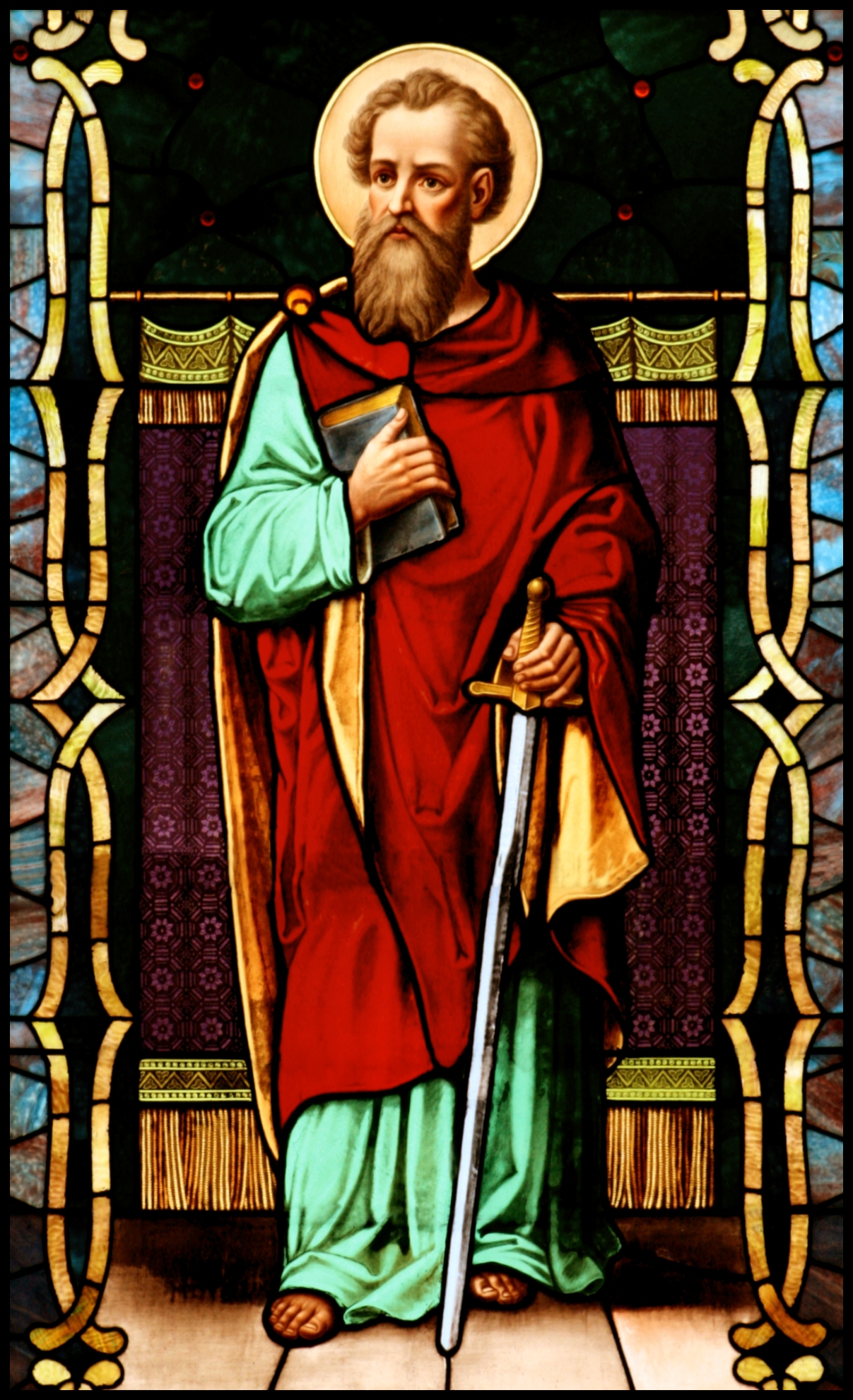
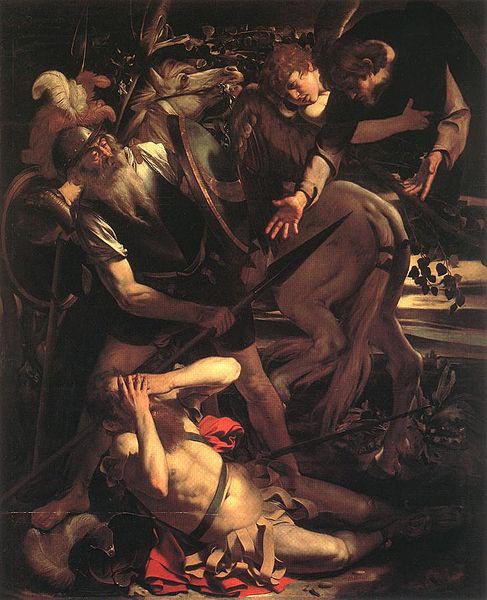
St. Paul was knocked down by God's power and might, blinded, and then told where to go for further instructions.  Paul was not warned in advance nor asked if he would like to be part of the then "new evangelization."

Yes, I have been pondering these things because periodically I review the locutions, dreams, and visions in which the Three In One have told and shown me, without my anticipating a thing, and without my input and not allowing my avoidance, at least not for long.

I consider people in our time period or close enough, who were overshadowed or overpowered or unexpectedly had some event by God in their lives to which they had no choice, and beg or bribe, God did not take it away.  

Padre Pio is one such person.  St. Michael's imparted the five wounds of Christ into Padre Pio while he was praying before a Crucifix.  Padre Pio cried out from the pain, fainted, and was found bleeding on the stone floor.  God also did not remove the stigmata completely until his death.   Catherine of Siena wanted her stigmata removed, and God did grant her that but instead imprinted them within, known as "interior stigmata", and those expert in study of cases of stigmata report that the interior stigmata are more physically painful than the exterior.  I do not know how they measure that, as pain is individually relevant, but there are means and scales of attempting pain measurement.


But I return to St. Paul, perhaps because he is on my mind as Elizabeth of the Trinity's co-favorite apostle; the other is John.  It is absolutely irrefutable that God did in deed slay Paul as he walked along.  (I'm not sure why some people think he fell off a horse; it seems Scriptures mention he fell to the ground.) 

Regardless, he was, without warning, felled like a tree in a storm.  He heard a locution, and he knew it was Jesus.  Well, you know the sequence of events.  Paul had not asked for that phenomenon nor wanted it, nor expected it, nor agreed in advance to being put upon like that.  But he did agree, for he was blind and without recourse otherwise.  His soul was struck deeply, and he was overpowered by God.

People were and still can be overpowered by God or whoever the Trinity sends for God's will to be done.  Sometimes the way God takes over a body and/or soul, is nothing a person can seemingly refuse.  Perhaps, though, with what God has done and willed in them, their minds and hearts are made conformable to God's.  This may be due to the sheer power of the Holy Spirit when that force comes and one is helpless against it.  There is always the element of agreement in God's will, ours with His, but there certainly are many instances in Scripture and in documented lives, of ways in which God exacted His will with them.


Ah, think of Juan Diego!  It was as though he had no choice, despite his trying to hide and avoid the same path and "the lady".  But in many cases, God does ask, or has an angel or Mary ask the person to do this or that, from simple acts to major life course changes--even to be willing to die in God's will, for souls or other Divine intentions known by God alone.

Remember Jacinta and Francesco of Fatima, Portugal?  We could think how horrible that God would have Mary tell them they would die soon, and ask them if they are willing to suffer for souls to be saved?  And they were willing, for when God imparts what He wills with us, there is something stirred within us, and that is Divine love.  When God comes upon a person, Divine love is nothing the person wants to refuse.

I'm not sure why, other than His Real Presence is omnipotent. He can overtake a body, mind, heart and soul.  Even when God takes a body into His own Hands such as allowing suffering, the mind and soul of the one He holds so dearly, begin to change; and, sometimes, contrary to the person's previous nature, that person becomes alert to God and agreeable to His will.  If not, God may persist and usually does.  It is seen often enough if we are observant, and in Scripture, that God at times plucks souls from this earthly realm.  Yes, God does that which He wills, and we can be transformed in His will.

While we do have free will--this other of God's will be done is documented in real people's lives and encounters with God.  It does seem that most of the time, the person is already agreeable to God and loves God and has at some point given His life to God.  But there are the examples of God imparting His will and Himself in explicit ways in a person's life, and sometimes the person was not at all in tune with God prior. 

I have considered God's power and might regarding our wills and His, off and on in my life and particularly in the last few years.  On occasion I get the notion that perhaps I could take charge of my life again, and it would be more physically pleasant, somewhat carefree, and more humanly "easy".  Maybe I could make my life different than what it is.  

But, even on the few times I've tried to orchestrate a better situation, it simply does not turn out that way.  It seems the suffering is intensified instead.  And sure, the Lord has told me in locutions and various dreams, visions, and situations, that my earthly life's suffering is His chosen vehicle for me and as an aid to my soul's progression in this life.  I nonetheless tend to review these matters periodically, which could be a very human sin against faith except that I always offer myself to His will, all over again, and with more intensity.

Maybe that is why I have kinship with Jonah.  Call it a fable as some do, but it could be an actual, lived experience even down to the whale swallowing him.  I have no hesitation to acknowledge that God does what He wills in whatever ways He wills.  Nothing is out of God's range of possibility.  But I appreciate Jonah because he tried to avoid and escape what God effectively, made Jonah do.  Try as he might, Jonah was not going to get out of the assignment and mission God gave him.  But we must consider that Jonah was already God's prophet.  However, at the time of St. Paul's conversion, Paul was an enemy of Christ.

Neither will any of us be successful in running from God's will if God does with us as He wills.  And He can and He will. Even the most hardened of souls, will at some point come under God's will if only at judgment, when God does what He wills with us.